All published articles of this journal are available on ScienceDirect.

Factors Contributing to Patients Bypassing Primary Healthcare Facilities: Evidence from Mpumalanga Province, South Africa
 iD
Ntombifuthi Blose1
iD
Zinhle Mtwane1
iD
Mashudu Mthethwa1
iD
Algernon Africa1
iD
Matome Mokganya1
iD
James Michael Burnett1
iD
Noluthando Ndlovu1
iD
Ashnie Padarath1
iD
iD
Ntombifuthi Blose1
iD
Zinhle Mtwane1
iD
Mashudu Mthethwa1
iD
Algernon Africa1
iD
Matome Mokganya1
iD
James Michael Burnett1
iD
Noluthando Ndlovu1
iD
Ashnie Padarath1
iD
Authors Info & Affiliations
Abstract
Introduction / Objective
Primary Healthcare (PHC) facilities are intended to be the first point of contact in South Africa’s health system, yet many patients bypass them and present directly at hospitals. Understanding the drivers of this bypassing is critical for informing policy and improving service delivery. The study seeks to determine the proportion, patterns, and reasons for non-referred patients seeking care directly at public hospitals in Mpumalanga Province.
Methods
A cross-sectional survey with a sample of 363 non-referred patients presenting in selected public hospitals in Mpumalanga Province. Facilities were purposively selected based on historical outpatient data from the District Health Information System (DHIS). Conveniently sampled patients completed a 28-item structured questionnaire that collected information on socio-demographics, knowledge of the referral policy, and reasons for bypassing PHC facilities. Descriptive statistics were performed using the Statistical Package for the Social Sciences.
Results
Analysis of routine data from DHIS indicated that 53.9% of outpatient visits in Mpumalanga public hospitals were by non-referred patients, exceeding the national average (41.8%). The highest proportion of non-referred hospital patients was from Ehlanzeni district (59.3%). Among the 363 surveyed non-referred patients, negative perceptions of PHC services, long waiting times, and medicine shortages were among the reported reasons for seeking care directly at hospitals.
Discussion
Various factors contribute to non-referred patients seeking care directly from the hospital. The implications are significant: inappropriate hospital utilisation strains limited resources, undermines the referral system, and exacerbates inequities in service delivery.
Conclusion
The study found that surveyed non-referred patients reported patient-level perceptions and health system challenges as reasons for seeking care directly at hospitals. Addressing these reported factors may strengthen the referral system and promote equitable access to PHC services.
1. INTRODUCTION
1.1. The South African District Health System and Primary Healthcare
The South African public health system is built on the District Health System (DHS) [1], which was conceived during the political transition in 1994 and formalised through the White Paper for the Transformation of the Health Sector in South Africa and the National Health Act No. 61 of 2003 [2]. The DHS comprises community-based services including approximately 3 500 clinics and Community Health Centres (CHCs), as well as 260 district hospitals [1]. The first point of entry to the healthcare system provided by general practitioners, nurses or other allied health professionals is referred to as PHC. This level of care is aimed at prevention of disease, early diagnosis, treatment, and referrals to secondary and tertiary care, thus ensuring continuity of care [3]. These services are often provided by non-physician clinicians, such as nurses who are skilled in attending to patients with minor ailments and in referring patients with more complex conditions to secondary institutions [4]. In accordance with the National Health Act (2003), public hospitals are categorised as follows: PHC and CHC facilities which feed into district (level 1) hospitals, then regional (level 2), tertiary (level 3) and central and specialised (level 4) hospitals [5]. The country’s referral system forms part of the comprehensive healthcare service delivery platform that manages healthcare needs by referring patients from an initiating facility to a facility or service that can provide the appropriate level of care [6]. For the referral system to be effective, all levels of health service delivery should function optimally, with patients accessing PHC facilities first, and following clinical examination, being referred to higher levels of care if required. According to the National Norms and Standards for District Hospitals (2002), a two-way referral system between the clinic and hospital and between the hospital and its regional hospital is essential [7]. A functioning referral system ensures that patients are managed at the appropriate level of care, preventing unnecessary overload of higher-level hospitals with conditions that can be managed at PHC level [8]. A well-coordinated referral pathway enables seamless patient management, proper documentation, and feedback between levels of care, especially for chronic disease management, for example Human Immunodeficiency Virus (HIV) and Tuberculosis (TB), where patients require long-term follow-up and integrated services [9].
1.2. The Referral System and Continuity of Care
Without proper referrals, some patients may bypass PHC and access higher levels of care directly, potentially undermining equitable access to specialised services and the efficient functioning of the referral system [10]. Self-referral or non-referred attendance refers to patients who present directly to a higher level of care without a formal referral from a lower-level facility [11], while bypassing specifically refers to patients who deliberately seek care at a hospital instead of first attending their designated PHC facility [12]. However, bypassing or non-referred attendance does not necessarily imply clinically inappropriate hospital use, as some patients may require hospital-level care despite the absence of a referral, whereas others bypass PHC due to legitimate access barriers or perceived poor quality of care. Patients who bypass PHC often incur higher out-of-pocket expenses for transport, diagnostics and medicines, and hospitals spend more time managing uncomplicated conditions that could be treated for a lower cost at PHC level.
1.3. Triage and the Burden of Non-urgent Hospital Attendance
The South African Triage Scale (SATS), developed in 2004, aims to expedite care for life-threatening conditions while streamlining the management of less urgent cases [13]. It uses a five-tier, colour-coded framework: red (emergency), orange (very urgent), yellow (urgent), green (routine), and blue (deceased). However, clinical judgment may override the triage score where necessary to avoid potential patient misclassification [13, 14]. Several public hospitals in South Africa have adopted the SATS system to ensure timely patient care. However, its implementation is often constrained by systemic challenges including resource constraints, communication challenges, high patient loads, and long waiting times [13, 14]. Large patient volumes, primarily driven by non-referred patients presenting at hospitals with non-urgent conditions, further strain the triage process.
1.4. Non-referred Attendance in Mpumalanga Province
Current evidence highlights a concerning trend in Mpumalanga Province, where approximately 54% of new patients directly seek care at public hospitals without a referral from a local PHC clinic [15]. This places Mpumalanga as the third-highest province with non-adherence to the referral system, undermining the effectiveness and sustainability of the public health system.
1.5. Study Aim
This study aimed to describe the trends and patterns of patients seeking care directly at hospitals without a referral from PHC facilities in Mpumalanga Province. Specifically, the study aimed to quantify the extent and patterns of non-referral and to examine patient-related factors, including knowledge of the referral system, perceptions of PHC services, and self-reported reasons for seeking care directly at hospitals.
2. MATERIALS AND METHODS
This cross-sectional survey was conducted among non-referred patients presenting in public hospitals in Mpumalanga Province in November 2024. The survey was informed by a review and analysis of programmatic data from DHIS. The province consists of three health districts, namely: Ehlanzeni, Nkangala and Gert Sibande, and has 51 public hospitals and 257 fixed clinics as of March 2025 [16]. Ehlanzeni District has the highest total population (1 928 897), followed by Nkangala District (1 783 201), and Gert Sibande District with 1 363 811 [17]. A purposive sampling approach was adopted to select hospitals in Mpumalanga for the primary data collection component of the study. A historical average (HA) of the Outpatient Department (OPD) New Client Not Referred Rate for the 2019/20, 2020/21, 2021/22, and 2022/23 financial years was calculated to establish each hospital’s baseline burden of non-referred outpatient attendance. As the HA served as the benchmark, the 2023/24 financial year was excluded from its calculation. The 2023/24 OPD New Client Not Referred Rate was then compared with each hospital’s HA to assess changes in the burden of non-referred attendance over time. Hospitals were classified as high if the 2023/24 headcount exceeded the HA, indicating an increased burden of non-referred attendance relative to previous years, and low if it was equal to or below the HA. Hospitals were further stratified by rural and urban location within each district municipality to ensure representation across geographical settings. Institutional support was then sought from the identified list of selected hospitals, which also included four backup facilities. The final sample comprised 10 public hospitals (four rural and six urban). that provided support and provided the required institutional approval within the study period; consequently, two backup facilities ended up being part of the study sample. Table 1 presents the participating hospitals.
| District Municipality | Facility Setting | Hospital Type | Historical Average (%) |
|---|---|---|---|
| Ehlanzeni | Facility A - Rural | Regional | 65.4 |
| Facility B- Rural | District | 65.5 | |
| Facility C - Rural | District | 49 | |
| Facility D - Urban | District | 60.6 | |
| Facility E - Urban | District | 55.4 | |
| Gert Sibande | Facility F - Urban | District | 74.6 |
| Facility G- Urban | District | 81.5 | |
| Nkangala | Facility H - Rural | District | 38 |
| Facility I - Urban | Tertiary | 44.2 | |
| Facility J - Urban | District | 61.6 |
OPD new client not referred rate is the percentage of new OPD clients who accessed hospital outpatient services without a referral from another health facility or doctor, calculated as the number of new OPD clients not referred divided by the total number of new OPD clients (referred and not referred), expressed as a percentage. The indicator is used to monitor trends in patients bypassing PHC facilities and to assess the effectiveness of PHC re-engineering in promoting appropriate referral pathways. OPD follow-up and emergency clients are excluded from the denominator [16]. To support the reliability of our analysis, we conducted an exploratory data assessment before proceeding with further analysis. The assessment focused on identifying potential concerns that could affect interpretation, including missing values in the dataset, extreme values, such as rates greater than 100%, and consistency between the reported indicator values and recalculated proportions. No missing values or extreme values were identified. Because the dataset included both the numerator and denominator, we were able to recalculate the proportions. The recalculated values matched the percentages reported in DHIS.
The survey sample size was estimated using the proportion formula:
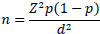
assuming a 95% confidence level, a 5% margin of error, an estimated population of 25,000 non-referred pa-tients presenting to public hospitals in Mpumalanga Province over one month, and an estimated rate of 52.6% of non-referred patients attending hospitals [15]. These assumptions yielded a minimum target sample of 378 participants. Although a total of 378 participants were recruited, 15 questionnaires were excluded for lacking digital informed consent signatures, resulting in a final analytical sample of 363 participants. Con-venience sampling was used to recruit eligible non-referred patients, as it enabled the inclusion of partici-pants who were available and met the study eligibility criteria during the scheduled data collection visits. As convenience sampling was used, the calculated sample size served as a recruitment target rather than ensur-ing statistical representativeness.
Written informed consent was obtained electronically from all participants prior to participation through an informed consent form embedded within the Research Electronic Data Capture (REDCap) mobile application. A validated questionnaire [18] was adapted to the study aims, piloted, and administered face-to-face to patients by 10 trained fieldworkers using REDCap. The questionnaire was administered in English. Fieldworkers clarified questions in participants’ preferred language where necessary; however, no formally translated versions of the questionnaire were used. Each fieldworker was assigned a target number of questionnaires to complete across the participating hospitals. Data collection was undertaken during a single scheduled visit to each hospital at a date and time agreed with hospital management, with fieldworkers spending the full working day at each facility to recruit eligible participants. No predetermined facility-specific quotas were applied; recruitment at each hospital depended on the number of eligible non-referred patients available during the scheduled visit. In some hospitals, healthcare workers assisted fieldworkers in identifying potentially eligible participants by referring patients triaged as green according to the SATS, indicating non-urgent conditions. In other hospitals, fieldworkers approached patients directly and screened them for eligibility by confirming whether they had been referred to the hospital. Patients who presented without a referral letter were considered eligible for the study, whereas those with referral letters were excluded. Patients triaged as red, orange, or other urgent categories were also excluded.
Participants were eligible for inclusion if they were patients presenting at the participating hospitals during the scheduled data collection visit, had not been referred to the hospital from another health facility, and presented without a referral letter. Where triage information was available, patients classified as green (non-urgent) according to the SATS were considered for recruitment. Patients who presented with a referral letter, had been formally referred to the hospital, or did not meet the other study eligibility requirements were excluded. The 28-item English questionnaire included sections on demographic characteristics, hospital utilisation, PHC information, and knowledge of the referral policy. Completed questionnaires underwent quality checks before being uploaded to the REDCap cloud server.
Statistical Package for the Social Sciences (version 29) was used for analysing the data, with Microsoft Excel being used to generate graphs. Descriptive statistics and cross-tabulations were used to explore the data.
Data collection commenced after obtaining ethical approval from Pharma-Ethics (reference no: 240726606). Permission to access facilities was granted by the Mpumalanga Provincial Health Research Ethics Committee, with approval reference (MP_202410_004) issued through the National Health Research Database (NHRD). This study was financially supported by the National Department of Health (NDoH).
3. RESULTS
The characteristics of the study sample are presented first, followed by the extent and patterns of non-referral, knowledge of the referral policy, perceptions of PHC, and reported reasons for non-referred patients seeking care at public hospitals.
3.1. Characteristics of the Study Sample
Seventy-two percent (262) of the participants were females. Overall, 76% (274) of the participants completed secondary school, 67.8% (240) were unemployed, and 71% (256) were single. In the Ehlanzeni district, nearly three-quarters (73.3%) of participants were female. The majority completed secondary schooling (79.5%), and more than three-quarters were unemployed (78.6%). Furthermore, nearly three-quarters (71.4%) of the participants indicated that they were single. There were 64 patients surveyed in three hospitals in Gert Sibande district, with an average age of 39.4 years. Just over half (59.4%) of the participants were female. Most participants had completed secondary schooling (75%) and nearly two-thirds were unemployed (62.9%). More than three-quarters (79.7%) of the participants indicated that they were single. There were 138 patients surveyed in the three hospitals in Nkangala district, whose average age was 39.6 years. Just over three-quarters (76.8%) of the participants were female. Most participants had completed secondary schooling (71%) and more than half were unemployed (58%). Nearly two-thirds (65.2%) of the participants indicated that they were single (Table 2).
| Variables |
Ehlanzeni n (%) |
Gert Sibande n (%) |
Nkangala n (%) |
Total n (%) |
|---|---|---|---|---|
| Mean Age (SD) | 40.0 (16.0) | 39.4 (15.0) | 39.6 (12.0) | 39.6 (14.5) |
| Sex | ||||
| Female | 118 (73.3) | 38 (59.4) | 106 (76.8) | 262 (72.2) |
| Male | 43 (26.7) | 26 (40.6) | 32 (23.2) | 101 (27.8) |
| Education | ||||
| None | 5 (3.1) | 1 (1.6) | 10 (7.2) | 16 (4.4) |
| Primary school | 13 (8.1) | 5 (7.8) | 12 (8.7) | 30 (8.3) |
| Secondary school | 128 (79.5) | 48 (75.0) | 98 (71.0) | 274 (75.5) |
| Tertiary | 15 (9.3) | 10 (15.6) | 18 (13.0) | 43 (11.8) |
| Employment Status* | ||||
| Formally employed | 16 (10.4) | 11 (17.7) | 38 (27.5) | 64 (18.1) |
| Self-employed | 17 (11.0) | 12 (19.4) | 20 (14.5) | 49 (13.8) |
| Unemployed | 121 (78.6) | 39 (62.9) | 80 (58.0) | 240 (67.8) |
| Missing | 7 (4.3) | 2 (3.1) | 0 (0.0) | 9 (2.5) |
| Relationship Status | ||||
| Single | 115 (71.4) | 51 (79.7) | 90 (65.2) | 256 (70.5) |
| Married | 24 (14.9) | 8 (12.5) | 27 (19.6) | 59 (16.3) |
| Divorced/Separated | 1 (0.6) | 0 (0.0) | 2 (1.4) | 3 (0.8) |
| Widow/Widower | 7 (4.3) | 1 (1.6) | 8 (5.8) | 16 (4.4) |
| Living with a partner | 14 (8.7) | 4 (6.3) | 11 (8.0) | 29 (8.0) |
3.2. Proportion and Patterns of Non-referral
Analysis of routine DHIS data using the OPD New Client Not Referred (%) indicator showed that the highest proportion of outpatient visits by non-referred patients was recorded in Ehlanzeni (59.3%), followed by Gert Sibande (56.1%) and Nkangala (42.0%). Overall, 53.9% of outpatient visits to public hospitals in Mpumalanga were by non-referred patients, exceeding the national proportion of 41.8% (Fig. 1).
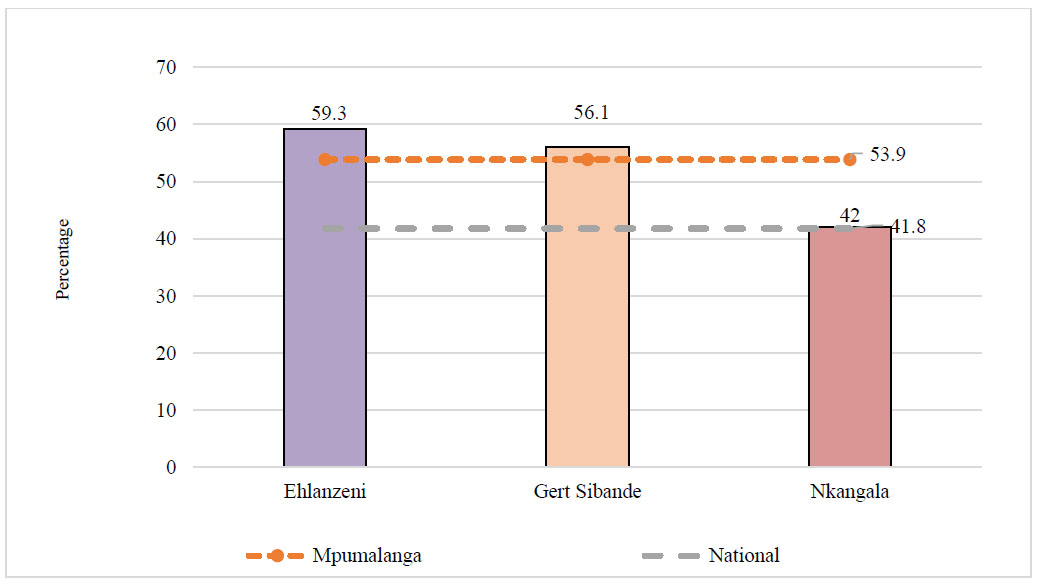
Percentage of non-referred patients at district levels, 2023/24 [15].
The prevalence of non-referred patients varied across districts. In Gert Sibande, two urban facilities reported particularly high rates at 75.8% and 72.7%, respectively. At these hospitals, the proportion of non-referred patients exceeded the provincial and district averages. Similarly, two rural facilities in Ehlanzeni exceeded both the provincial and district averages. In Nkangala, one facility recorded a rate of 51.9%, which remained lower than the provincial and district average of all the districts (Fig. 2).
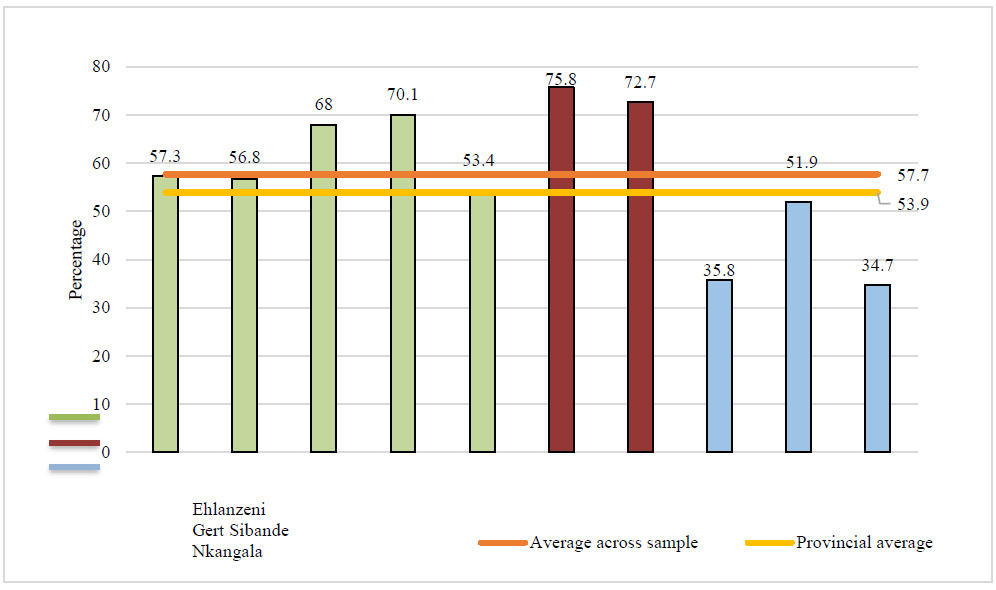
Proportion of non-referred patients across sampled hospitals.
3.3. Knowledge of the Referral System
Patients’ knowledge of the referral system was assessed using a closed-ended question asking, “What does a healthcare referral system refer to?” Four response options were provided, with the correct response being “A process where patients are referred from a clinic to the hospital for specialised care or services.” Participants were also asked to identify the first point of contact for healthcare by selecting either a clinic or a hospital. Across the sampled facilities in the three districts, 68% (n = 249) of non-referred patients correctly identified the healthcare referral system and indicated that the clinic should be the first point of contact for healthcare services. The proportion of patients selecting the correct response regarding the healthcare referral system was lower in Ehlanzeni (54%) and Gert Sibande (64%) than in Nkangala (82%). However, only 58% of patients in Nkangala identified the clinic as the first point of contact for healthcare, compared with 68% in Ehlanzeni and 78% in Gert Sibande (Fig. 3).
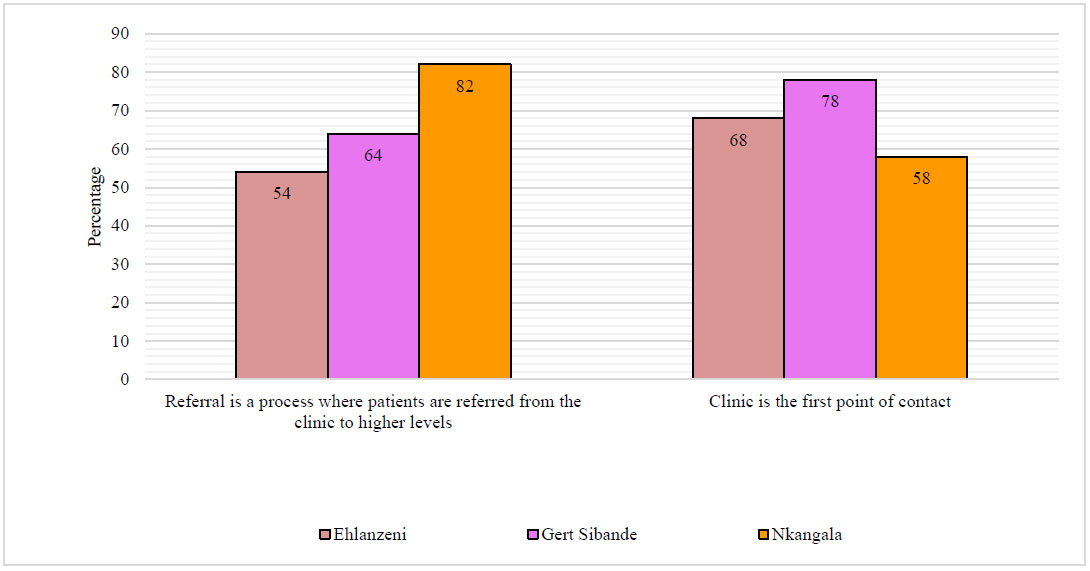
Knowledge of the referral system across districts.
3.4. Patients’ Perceptions of PHC Services
Perceptions of service quality at PHC clinics varied across the three districts (Fig. 4). In Ehlanzeni and Gert Sibande, approximately two in five participants rated the quality of clinic services as good (42.7% and 40.6%, respectively), while around one-fifth rated the services as poor (21.7% and 17.2%, respectively). By contrast, participants in Nkangala were more likely to report neutral perceptions of clinic service quality (54.3%), with fewer rating services as good (27.5%) or poor (13.8%). Percentages are based on available responses and may not total 100% because of missing responses.
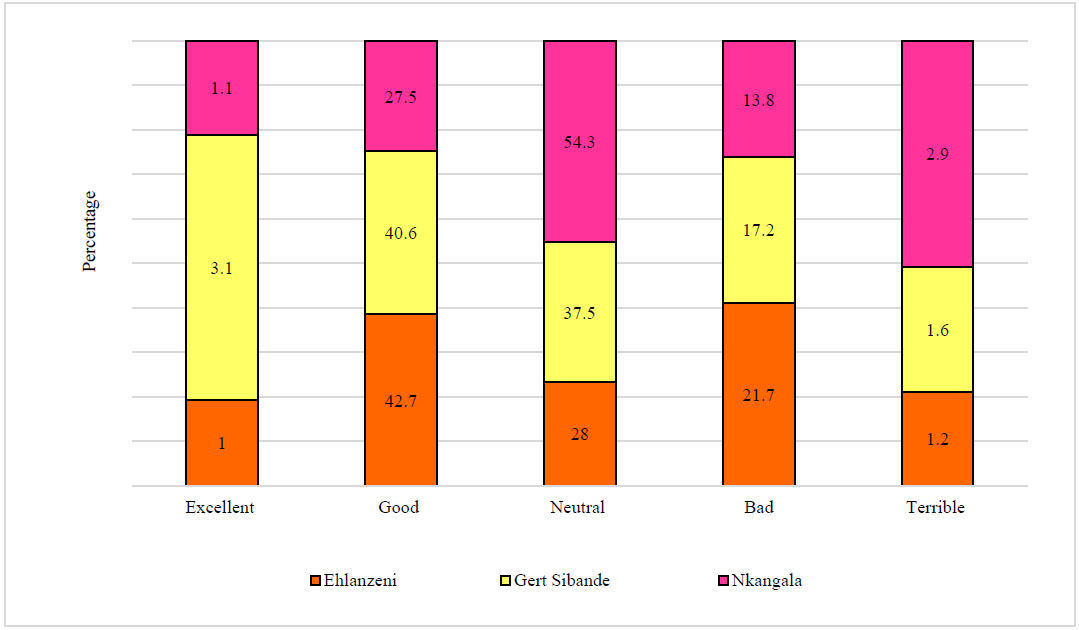
Patients' perception of services at PHC facilities across districts.
3.5. Reasons for Bypassing PHC Facilities
The study identified several reasons for bypassing, including perceived better care, long waiting times, and frequent medicine shortages.
3.6. Perceived Better Care due to the Presence of Medical Doctors
The majority of non-referred patients perceived that hospitals provided better care because of the presence of medical doctors, with the highest proportion reported in Ehlanzeni (80.0%), followed by Gert Sibande (68.8%) and Nkangala (67.4%) (Fig. 5).
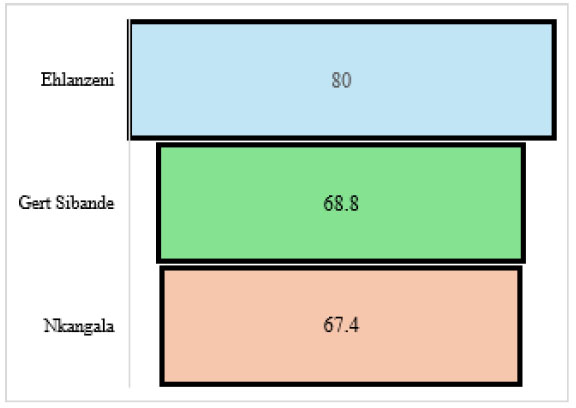
Perceived better care.
3.7. Long Waiting Times at PHC Facilities
Table 3 presents the proportion of non-referred patients who reported long queues and waiting times at PHC clinics as a reason for seeking care directly at hospitals. This was reported by 37.7% (52/138) of participants in Nkangala, 34.4% (22/64) in Gert Sibande, and 27.9% (45/161) in Ehlanzeni.
| Long Queues: Waiting Times at Clinic |
Ehlanzeni n/161 |
Gert Sibande n/64 |
Nkangala n/138 |
|---|---|---|---|
| 45 (27.9%) | 22 (34.4%) | 52 (37.7%) |
3.8. Medicine Shortages at PHC Facilities
Patients also identified medicine unavailability at PHC facilities as one of the factors contributing to their decision to seek care directly at hospitals without a referral. Specifically, 18.1% of patients in Nkangala, 15.5% in Ehlanzeni, and 9.4% in Gert Sibande reported bypassing clinics because of a lack of medicines (Fig. 6). While the survey did not distinguish whether these responses were based on previous experiences of medicine stock-outs, expectations of medicine shortages, or visits for medication refills, participants’ perceptions likely reflected assumptions formed through prior experiences with medicine availability at PHC facilities.
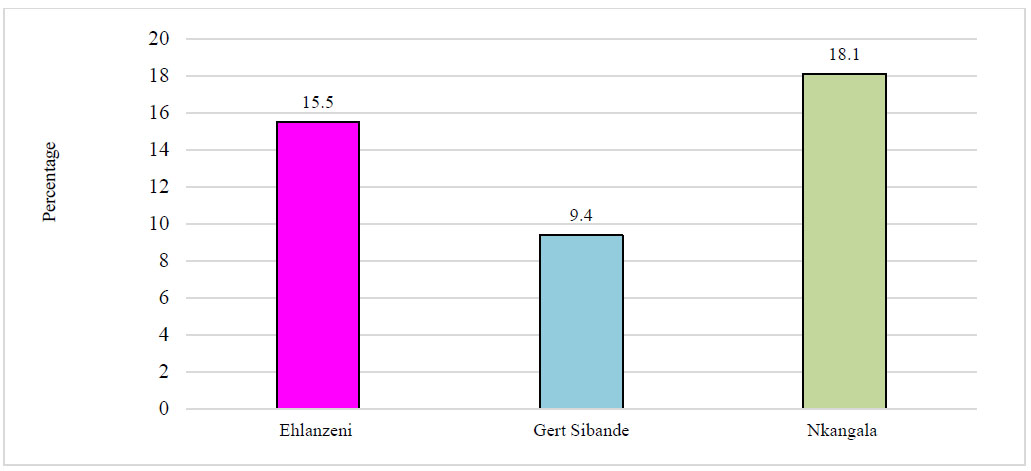
Medicine availability as a reason for patients bypassing clinics.
4. DISCUSSION
This study examined the factors reported by non-referred patients as reasons for seeking care directly at hospitals rather than first attending PHC facilities in Mpumalanga Province. Presenting directly to hospitals without a referral places additional demands on higher levels of care and may compromise the efficiency of the referral system by increasing pressure on hospital resources [19]. The study found that limited knowledge of the referral system, negative perceptions of PHC services, perceptions that hospitals provide better care, long waiting times, and limited availability of medicines were among the reasons participants reported for seeking care directly at hospitals. Collectively, these challenges influence patient decision-making and undermine the intended role of PHC within the healthcare system.
The proportion of non-referred patients seeking care at hospitals without a referral letter in Mpumalanga Province was higher than the national average, suggesting potential challenges with the province's PHC referral system. Across the districts, Ehlanzeni recorded the highest proportion of non-referred patients (59.3%), followed by Gert Sibande (56.1%) and Nkangala (42.0%). The higher proportions observed in Ehlanzeni and Gert Sibande may reflect differences in healthcare-seeking patterns and access to PHC services within these districts. Together, these findings highlight opportunities to strengthen PHC services and the referral system at district level while improving patient confidence in community-based care.
Knowledge of the referral system among non-referred patients was moderate across the province. Overall, 68% of participants correctly identified the referral process from a clinic to a hospital for specialised care, although differences were observed across districts. Awareness was highest in Nkangala and lowest in Ehlanzeni; however, this understanding was not consistently reflected in participants’ identification of the PHC clinic as the appropriate first point of contact for healthcare or in their healthcare-seeking behaviour, as all participants had presented directly to hospitals without a referral. These findings are consistent with a study conducted in KwaZulu-Natal Province, which reported that knowledge of the referral system did not necessarily translate into appropriate utilisation of PHC services [11]. In the present study, participants also reported negative perceptions of PHC services, unavailability of medicine, and long waiting times as reasons for seeking care directly at hospitals, suggesting that knowledge of the referral system alone may be insufficient to promote appropriate use of PHC services [20-23].
Patients' perceptions of the quality of PHC services appeared to influence their healthcare-seeking behaviour. While approximately two in five participants in Ehlanzeni and Gert Sibande rated the quality of PHC clinic services as good, around one-fifth perceived the quality as poor. In contrast, more than half of participants in Nkangala reported neutral perceptions of clinic service quality. These findings suggest that perceptions of PHC service quality varied across districts and may have contributed to patients' decisions to bypass PHC clinics. Similar concerns about the quality of PHC services in Mpumalanga Province have been linked to staff shortages [21].
Across the three districts, perceived quality of care was a major factor influencing patients’ decisions to bypass PHC clinics. Participants commonly reported that hospitals offered better quality services, faster access to treatment, and greater availability of medical doctors. The perception that hospitals provide superior care because of the presence of doctors was particularly evident in Ehlanzeni District (80.0%), followed by Gert Sibande (68.8%) and Nkangala (67.4%). Similar findings have been documented in previous studies, where patients associate doctors with higher levels of expertise, better diagnostic capabilities, and more effective treatment than other healthcare providers [12, 24]. Consequently, the absence of medical officers at some PHC facilities may discourage patients from seeking care at these facilities, despite the availability of trained nurses and other healthcare workers capable of managing most PHC conditions. Long queues and waiting times at PHC clinics were commonly reported by non-referred patients as a reason for seeking care directly at hospitals across all three districts. These findings are consistent with the Mpumalanga State of Health Report, which identified long waiting times at PHC facilities as an ongoing concern among patients in the province [21]. Similarly, a study conducted in the eThekwini District found that prolonged waiting times were frequently reported as a reason for bypassing PHC facilities [25]. Long waiting times may discourage patients from initially seeking care at PHC clinics, particularly when they perceive that hospitals provide more timely or efficient services. Such perceptions may reduce confidence in PHC services and contribute to patients presenting directly to hospitals for conditions that could otherwise be managed at the PHC level.
Medication unavailability at PHC clinics was also reported by some participants as a reason for seeking care directly at hospitals. Specifically, 18.1% of participants in Nkangala, 15.5% in Ehlanzeni, and 9.4% in Gert Sibande reported medicine availability as a reason for bypassing PHC clinics. These findings are consistent with previous studies that identified inadequate medicine supply as a barrier to effective referral systems and continuity of care [26, 27]. Although reported by a smaller proportion of participants than other reasons for seeking care directly at hospitals, the findings suggest that concerns about medicine availability may influence healthcare-seeking behaviour for some patients.
Beyond patient perceptions and service-related factors, the geographical accessibility of hospitals may partly explain persistent non-referred attendance. Geographic proximity is a well-documented determinant of facility choice, with patients tending to use the facility closest to their home or workplace. Studies in South Africa and other sub-Saharan African settings have shown that patients present directly to hospitals, which are more accessible than their designated PHC facilities [25-28]. Where a hospital is the most accessible facility for surrounding households, bypassing may represent a rational response to the spatial configuration of services rather than a rejection of PHC, suggesting that some degree of non-referred attendance is likely to persist in any health system. Notably, even the Western Cape, which has comparatively well-established appointment and referral systems [29], recorded the lowest provincial OPD New Client Not Referred rate (11.2%), yet non-referred attendance remains documented there [30]. Referral-strengthening interventions should therefore aim to reduce inappropriate bypassing to manageable levels rather than to eliminate it and should take facility location into account when defining catchment populations and referral pathways.
4.1. Implications for Policy and Practice
The study findings suggest that limited knowledge of the referral system, negative perceptions of PHC services, and operational challenges at some PHC facilities contribute to bypassing behaviour in Mpumalanga Province. Many patients reported seeking care directly at hospitals without a referral because they were unfamiliar with referral pathways. Others perceived hospitals to provide better-quality care, particularly because of the availability of medical doctors, while concerns about long waiting times and medicine availability at some PHC facilities also influenced patients’ decisions to bypass clinics.
These findings suggest that efforts to reduce bypassing should focus on addressing the factors identified by patients. Improving public awareness of the referral system may help patients better understand the appropriate entry point into the health system. In addition, strengthening patient experiences and confidence in PHC services by addressing operational challenges, including waiting times and the consistent availability of essential medicines, may encourage greater utilisation of PHC facilities. Together, these measures may help reduce unnecessary self-referrals to hospitals, improve the functioning of the referral system, and support more efficient use of healthcare resources.
5. LIMITATIONS
While efforts were made to ensure methodological rigour and scientific credibility, several limitations should be considered when interpreting the findings. To achieve balanced geographic representation across Mpumalanga's three districts, hospitals were initially selected from routine DHIS data, whereby an equal number of facilities per district, including primary and backup facilities, were identified. However, logistical constraints, specifically delays in obtaining site-level approvals, resulted in the inclusion of the first 10 hospitals that granted permission. This pragmatic approach resulted in uneven district representation, with a notably smaller sample from Gert Sibande, potentially reducing the statistical power and reliability of district-level comparisons. Within participating hospitals, eligible participants were recruited using convenience sampling. As a result, the findings may not be representative of all patients attending public hospitals in Mpumalanga and should be interpreted with caution. Furthermore, the study did not include a comparison group of patients who first attended PHC facilities as recommended by the referral system. Consequently, differences between patients who bypassed PHC facilities and those who followed referral pathways could not be assessed.
A total of 15 responses were excluded because of missing digital signatures resulting from poor mobile network connectivity. Data were also collected during a single scheduled visit to each hospital within one month (November 2024); as attendance patterns may vary by day of the week and season, the timing of data collection may have influenced the profile of patients recruited and the district comparisons. In addition, the study relied on participants' self-reported reasons for bypassing PHC facilities, which may be subject to recall bias and social desirability bias. Participants may also have underreported or overreported factors influencing their healthcare-seeking behaviour. The questionnaire was administered in English, with clarification provided by trained fieldworkers in participants’ preferred language where required. Nevertheless, this approach may have introduced language-related bias or differences in participants' interpretation of some questions. Although eligibility was based on the absence of a referral letter and non-urgent triage status, there remains the potential for misclassification of some participants because referral letter status and triage categorisation were determined during routine hospital processes. Finally, the study was conducted in selected public-sector hospitals and therefore does not capture the experiences of individuals who seek care exclusively at PHC facilities, private healthcare providers, or traditional healers. Consequently, the findings are not generalisable to the wider Mpumalanga population.
Future research should measure geographic access directly, for example the relative distance from patients’ households to their designated PHC facility and to the nearest hospital, and should include a comparison group of referred patients to enable differences between those who bypass PHC facilities and those who follow referral pathways to be assessed.
CONCLUSION
Patients’ decisions to bypass PHC facilities in Mpumalanga were influenced by a combination of individual perceptions and health system factors. Concerns regarding long waiting times, medication availability, perceived quality of care, and the availability of medical doctors contributed to patients seeking care directly at hospitals. These findings suggest that bypassing behaviour is shaped not only by patients’ clinical needs but also by their experiences of care and confidence in PHC services.
The study findings have several implications for strengthening the referral system. The limited knowledge of referral pathways reported by some participants suggests a need to improve community awareness of the referral system and the role of PHC facilities as the first point of care. Patients’ concerns about the quality of care highlight the importance of strengthening patient-centred care and promoting positive interactions between healthcare workers and patients to improve public confidence in PHC services. Finally, addressing operational challenges identified by participants, including long waiting times and the inconsistent availability of essential medicines, may improve patient experiences at PHC facilities and reduce unnecessary self-referrals to hospitals. Collectively, these measures may contribute to improved utilisation of PHC services, strengthen the functioning of the referral system, and support more efficient use of healthcare resources. Nevertheless, given the geographic realities of facility location, some degree of non-referred attendance is likely to persist; efforts should therefore focus on reducing inappropriate bypassing to manageable levels rather than eliminating it.
AUTHORS’ CONTRIBUTIONS
The authors confirm contribution to the paper as follows: T.N.M., J.M.B., N.N., and A.P.: Study conception and design; T.N.M., M.M., Z.M., M.S.M., and A.A.: Data collection; T.N.M., N.B., M.M., Z.M., M.S.M., and A.A.: Analysis and interpretation of results; Draft manuscript: all authors contributed to drafting the manuscript. All authors reviewed the results and approved the final version of the manuscript.
LIST OF ABBREVIATIONS
| CHC | = Community Health Centre |
| DHIS | = District Health Information System |
| DHS | = District Health System |
| HA | = Historical Average |
| NDoH | = National Department of Health |
| NHRD | = National Health Research Database |
| OPD | = Outpatient Department |
| PHC | = Primary Healthcare |
| REDCap | = Research Electronic Data Capture |
ETHICS APPROVAL AND CONSENT TO PARTICIPATE
Ethical approval was obtained from Pharma-Ethics (Reference: 240726606), the NDoH, and the Provincial Health Research Ethics Committee (NHRD Reference: MP_202410_004). Support letters were secured from hospital Chief Executive Officers, and written informed consent was obtained from all participants.
HUMAN AND ANIMAL RIGHTS
All human participants were involved in the study in accordance with the ethical standards of the relevant ethics committee, the 2013 Declaration of Helsinki, the Guidelines for Good Practice in the Conduct of Clinical Trials with Human Participants in South Africa (third edition, 2020), and Ethics in Health Research: Principles, Processes and Structures (third edition, 2024), which outline the rights of research participants and provide guidance for health research involving human participants.
AVAILABILITY OF DATA AND MATERIALS
The datasets generated and/or analysed during the current study are not publicly available because they contain information collected from human participants and are subject to ethical and institutional approval conditions. De-identified data may be made available by the corresponding author upon reasonable request, subject to approval by the relevant ethics committee and the National Department of Health and/or the Mpumalanga Department of Health, where applicable.
ACKNOWLEDGEMENTS
The Health Systems Trust gratefully acknowledges the support of the NDoH in this project. We also extend our appreciation to the Mpumalanga Department of Health for facilitating the research within the province, and to all participants for their valuable contributions.