All published articles of this journal are available on ScienceDirect.

Factors Influencing Childbearing Intentions in the Context of Declining Global Fertility Rates: A Scoping Review

Authors Info & Affiliations
Abstract
Introduction
Global fertility decline has emerged as a significant demographic challenge, particularly in developing countries, leading to population aging, workforce reduction, and slower economic growth. However, existing evidence lacks a comprehensive synthesis that integrates these multifactorial influences within the global context of fertility decline. This review aims to investigate the multifaceted factors influencing childbearing intentions among couples within the broader context of declining fertility rates, focusing on key individual, demographic, cultural, social, economic, and policy-related factors of reproductive decisions.
Methods
A scoping review was conducted following PRISMA-ScR guidelines. Comprehensive searches were performed in PubMed, Scopus, and Google Scholar for studies published between January 2010 and December 2023 that investigated factors associated with childbearing intentions. Fifty studies met the inclusion criteria.
Results
Findings reveal that individual, demographic, cultural, social, health-related, economic, insurance-related, and governmental factors significantly affect childbearing intentions.
Discussion
Age, education, and personal attitudes influence fertility intentions, while marital stability and family support strengthen the inclination to have children. Cultural norms shape preferences for larger families, and social support networks further contribute to fertility decisions. Economic stability remains a crucial determinant, as high child costs and financial insecurity often lead to postponing childbearing. Access to healthcare, health insurance, and maternity benefits also influences these decisions. Government policies promoting childbearing have shown mixed effectiveness, highlighting the need for their ongoing review and reform.
Conclusion
This review highlights the multifaceted determinants of childbearing intentions and underscores the importance of targeted interventions to address barriers and promote supportive family policies.
1. INTRODUCTION
The phenomenon of declining fertility rates has emerged as a major demographic challenge across the globe, particularly in developing nations such as Iran [1, 2]. Over the past few decades, many countries have witnessed a substantial decline in birth rates, leading to concerns about population aging, workforce shortages, and potential economic stagnation [3]. In Iran, the total fertility rate (TFR) has dropped from approximately 6.5 children per woman in the early 1980s to around 1.8 in recent years [4]. This dramatic decline raises critical questions about the underlying factors influencing couples' decisions to have children and the implications for future population dynamics [1, 2]. Several factors contribute to the decline in fertility rates, including increased access to education and employment opportunities for women, urbanization, and changing societal norms regarding family size and child-rearing [5, 6]. As women gain higher education and participate more actively in the workforce, their priorities often shift towards career development and personal fulfillment, which can lead to delayed marriage and childbearing [7]. Additionally, urbanization tends to correlate with smaller family sizes, as urban living often entails higher living costs and limited living space, prompting couples to reconsider their childbearing intentions [8, 9]. The transition from traditional to modern lifestyles has also played a crucial role in shaping reproductive behavior [10]. In many societies, the traditional family model, characterized by larger family sizes and early childbearing, is being replaced by a model that values smaller families and delayed parenthood [8, 11, 12]. This shift is often accompanied by changing gender roles, where women increasingly prioritize their careers and personal aspirations over early marriage and childbearing [13]. As a result, many couples are opting to have fewer children or delaying childbearing until they feel more financially secure and established in their careers [10, 11].
Understanding the factors that influence childbearing intentions is crucial for policymakers and social planners [14, 15]. Fertility intentions are shaped by a complex interplay of individual, social, cultural, economic, and governmental factors [15, 16]. Identifying these determinants can help develop targeted interventions and policies that address the barriers to childbearing, thereby promoting family growth and stability [10, 17, 18]. Moreover, understanding these factors can aid in predicting future demographic trends, which is vital for planning healthcare, education, and social services [19, 20]. Individual factors such as age, education level, and socio-economic status significantly impact fertility intentions. Younger couples with higher educational attainment often express a greater desire for children, while those with lower educational levels may have different priorities or face economic constraints that influence their decisions [21, 22]. Demographic factors, including marital status and family structure, also play a significant role [15, 23]. Couples who are married and have supportive family networks are generally more inclined to have children than those who are single or lack familial support [18, 24].
Cultural norms and values are critical in shaping childbearing intentions [25]. In many societies, traditional beliefs regarding family size and the role of children influence couples' decisions to have children [18, 26, 27]. For instance, in cultures that emphasize the importance of large families, couples may feel societal pressure to conform to these expectations [19, 28, 29]. Conversely, exposure to modernity and globalization can lead to shifts in attitudes towards smaller family sizes, particularly among younger generations [30]. Social factors, including peer influences and community support, also significantly affect childbearing intentions [19, 31]. Couples who perceive strong social support from family and friends are more likely to express a desire for children, highlighting the importance of community in fertility decisions [18, 24, 32].
Economic stability is another crucial determinant of childbearing intentions. High costs associated with raising children, coupled with financial insecurity, often lead couples to postpone or forgo having children altogether [33-35]. Economic policies that provide financial support for families can positively influence fertility intentions, as they alleviate some of the financial burdens associated with child-rearing [36-38].
Health-related factors, such as access to healthcare and perceived health risks associated with pregnancy, can also influence childbearing intentions [39-42]. Couples who have concerns about their health or the health of their potential children may delay or avoid having children [11, 43, 44]. Furthermore, governmental policies aimed at encouraging childbearing, such as parental leave and financial incentives, have shown mixed effectiveness. Some policies have successfully promoted higher fertility rates, while others have not adequately addressed the underlying concerns of couples [45-48]. Recent evidence also highlights that educational and counselling-based interventions can positively influence reproductive attitudes and decision-making. For example, information-based counselling has been shown to enhance individuals' knowledge, perception, and motivation regarding childbearing [49]. This underscores the importance of understanding individual, demographic, cultural, social, economic, and governmental determinants for developing effective policies and interventions that can support couples in their childbearing decisions [9,50-53]. Despite extensive systematic and scoping reviews examining determinants of fertility intentions in specific populations, there remains a lack of comprehensive evidence that integrates these multifactorial influences within the global context of fertility decline. This review aims to fill this gap by synthesizing existing literature on factors affecting childbearing intentions across diverse contexts. It provides a comprehensive overview of how demographic, economic, social, and cultural elements shape reproductive choices and inform policies that support couples' childbearing intentions amid global fertility decline. Accordingly, this review aims to answer the following research questions: what key factors influence childbearing intentions worldwide, how do these determinants shape reproductive decisions, and what implications do these findings have for the development of effective policies and interventions to address declining fertility rates?
2. METHODS
2.1. Study Design
This study was conducted as a scoping review to explore and map existing literature on the factors influencing increased childbearing. The review adhered to the PRISMA-ScR guidelines [54].
2.2. Search Strategy
A comprehensive literature search was performed across the databases PubMed, Scopus, and Google Scholar to identify relevant peer-reviewed studies related to health, demographic, and social factors influencing childbearing published between January 2010 and December 2023. In developing the search strategy, the review followed the PCC (Population, Concept, Context) framework recommended for scoping reviews, ensuring a comprehensive and structured approach [55]. In this review, the Population (P) referred to couples or individuals of reproductive age making decisions about childbearing. The Concept (C) focused on the factors influencing childbearing intentions and fertility-related decisions, including demographic, social, economic, cultural, and health-related determinants. The Context (C) encompassed global settings characterized by declining fertility trends, with a focus on both developed and developing countries. The following key terms and Boolean operators were used: (“childbearing intention” OR “fertility desire” OR “fertility intention” OR “fertility behavior”) AND (“economic factor” OR “financial stability” OR “social influence” OR “income level”) AND (“factor influencing childbearing” OR “Determinant of fertility”) AND (“social factor” OR “cultural norm” OR “policy intervention “). A detailed search strategy for each database (PubMed, Scopus, and Google Scholar) is presented in the supplementary Material (Table S1).
2.3. Eligibility Criteria
2.4. Study Selection Process
The initial search yielded over 1,000 articles. After eliminating 100 duplicate records via EndNote software, 900 unique articles remained. A subsequent screening of abstracts led to the exclusion of 300 records, and a detailed full-text review of the remaining 300 articles resulted in the exclusion of 250 that did not meet the study objectives. Ultimately, 50 articles that provided diverse perspectives on childbearing were reviewed. A detailed summary of the 10 main studies included in this review is presented in Table 1 . The selection process involved two independent reviewers who evaluated each article to ensure consistency in applying the inclusion and exclusion criteria. Discrepancies were resolved through discussion and consensus. The selection process followed the PRISMA-ScR and is summarized in Fig. (1).
| Author(s) | Year | Country/Context | Study Design | Sample Size | Key Findings Related to Childbearing Intentions |
|---|---|---|---|---|---|
| Ranjbar et al. [ 18 ] | 2024 | Global | Systematic scoping review | 46 studies | Financial security, cultural norms, and social support are major influences on fertility intentions |
| Jafari et al. [ 56 ] | 2016 | Iran (~31 provinces) | Panel data analysis | Provincial-level data for 10 years (2002-2012) | Marriage rate positively and divorce rate negatively affect fertility |
| Araban et al. [ 57 ] | 2020 | Iran (Saveh) | Cross-sectional survey | 483 women | Higher perceived social support, marital satisfaction, and positive attitudes toward motherhood increased childbearing intentions |
| Matsumoto & Yamabe [ 58 ] | 2013 | Japan (Hyogo) | Cross-sectional questionnaire survey | 1616 women | Women in rural areas expressed a greater preference for larger families than those in urban regions, and younger women showed lower fertility intentions |
| Tsai et al. [ 59 ] | 2022 | Taiwan -Administrative data on lottery winners |
Quasi-experimental
triple-difference (DDD) design |
Over 0.4 million lottery winners | Positive income shocks raised birth probability; this confirms the economic-resource effect on fertility |
| Buh, B. [ 60 ] | 2023 | Europe (high-income “Low-fertility contexts.” | Review study | Not applicable (review study) | Employment uncertainty is consistently associated with delayed childbearing across countries |
| Van Wijk & Billari [ 61 ] | 2024 | Multi-country (Australia, Germany, Russia, South Korea, Switzerland, UK, USA) – high-income contexts | Longitudinal individual-level analysis using Comparative Panel File data from seven countries | NR (Not Reported explicitly; multi-country panel dataset) | The positive relationship between income and first birth became stronger over the past two decades, indicating that higher income levels have become increasingly necessary for couples to start families and explaining the trend of fertility postponement in developed countries |
| Jayaraman et al. [ 62 ] | 2009 | South Asia (India, Nepal, Bangladesh) | Quantitative secondary analysis of Demographic and Health Survey (DHS) data | 90,976 married, non-pregnant women aged 15–49 (India 75,162; Bangladesh =8,864; Nepal =6,950) | Larger family size and a higher number of sons significantly decreased women’s desire for additional children. Son preference strongly influenced fertility intentions and contraceptive adoption patterns. Women with at least one son were more likely to stop childbearing and adopt permanent contraceptive methods. Effects were strongest in India and Nepal |
| Khadivzade & Arghavani [ 63 ] | 2014 | Iran (Mashhad – engaged couples attending premarital counseling centers) | Cross-sectional survey | 450 engaged couples | Religious commitment and traditional norms predicted higher fertility preferences |
| Hosseini, Saikia & Dasvarma [ 64 ] | 2021 | Iran (Tehran City) | Cross-sectional survey | 400 married women aged 15–49 years | A gap between desired and expected fertility, economic strain, urban cost of living, and employment insecurity suppressed intentions |
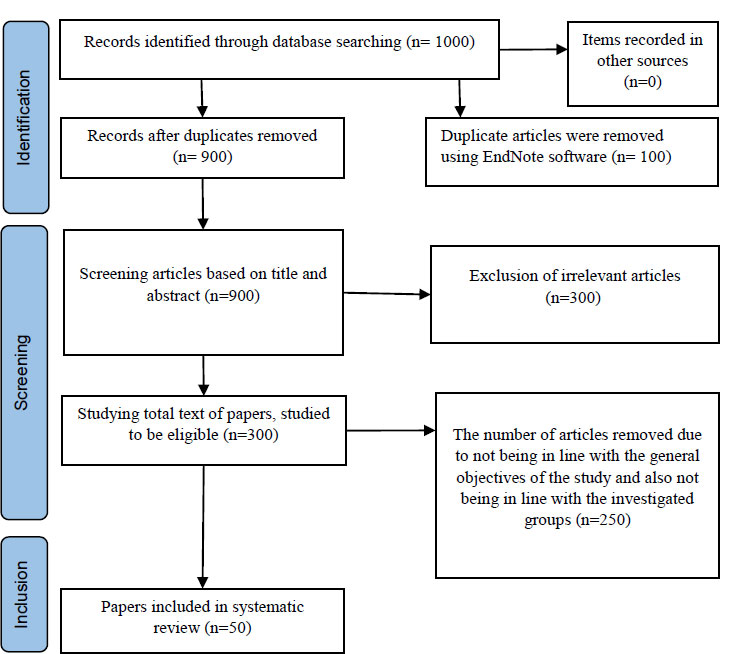
The process of searching and screening selected articles based on the PRISMA-ScR guidelines.
2.5. Data Extraction and Analysis
Key information was extracted from each selected article using a standardized data extraction form that included:
Author(s), year of publication.
Study design (qualitative, quantitative, or mixed methods).
Sample size and demographics (e.g., age, gender, socio-economic status).
Main findings related to demographic, economic, social, and personal factors influencing childbearing.
2.6 Data Synthesis
A thematic analysis was conducted to categorize findings into key themes, following the six-phase approach outlined by Braun and Clarke (2006) [ 65 ]: (1) familiarization with the data, (2) generating initial codes, (3) searching for themes, (4) reviewing themes, (5) defining and naming themes, and (6) producing the report. This process was applied inductively, allowing themes to emerge directly from the data extracted from the included studies rather than being imposed deductively from a pre-existing theoretical framework. This inductive approach was chosen to capture the diverse and multifaceted nature of factors influencing childbearing intentions across global contexts, ensuring flexibility in identifying patterns that reflected the heterogeneity of the literature. Data extraction was first performed independently by two reviewers (RR and SD) using a standardized form that captured study details, methodologies, and key findings related to demographic, economic, social, and personal factors. Initial codes were generated manually through line-by-line reading of extracted data, focusing on recurrent concepts (e.g., “age-related delays,” “financial insecurity,” “cultural norms”). No qualitative analysis software was utilized, as the dataset comprised primarily structured summaries from 50 studies, and manual coding facilitated iterative discussions among the team. Codes were then collated into potential themes by grouping similar ideas (e.g., individual-level factors like age and personal motivations formed a “micro-level” category). Themes were reviewed and refined through consensus meetings involving all authors (AR, FD, SS, RR, KH, and SD), where discrepancies were resolved by revisiting original study texts to ensure alignment with the evidence. To enhance reliability, inter-coder agreement was assessed informally during these meetings, with an initial agreement rate of approximately 85%; refinements were made until full consensus was achieved. This collaborative process minimized bias and ensured the themes were robustly represented in the literature. The final themes were organized into a multi-level framework (micro: individual and personal; meso: cultural and social; macro: economic and policy) to illustrate interconnections, providing a coherent narrative synthesis that integrated qualitative insights and quantitative data. This synthesis highlighted patterns and relationships among factors, while acknowledging the exploratory nature of scoping reviews.
2.7. Synthesis of Findings
The synthesized findings were organized into a coherent narrative that highlighted the interplay between various influencing factors. This narrative aimed to provide a comprehensive understanding of how these factors collectively shape childbearing intentions and behaviors. The synthesis included both qualitative insights from interviews or focus groups as well as quantitative data from surveys or demographic studies. This mixed-methods approach enriched the analysis by providing multiple perspectives on the issue.
3. RESULTS
To provide a better illustration of the interconnections among diverse factors influencing fertility intentions, the findings were categorized according to their level of influence: micro (individual and personal), meso (community and social), and macro (economic and policy-related) factors. Each theme is discussed in detail below.
3.1. Micro-level Factors (Individual and Personal Determinants)
3.1.1. Age
The existing literature indicates that age plays a significant role in childbearing decisions. Women who postpone childbirth for the sake of education or career advancement generally tend to have a lower inclination towards having more children. Additionally, research suggests that middle-aged women exhibit a greater desire to have children compared to younger women, who often prioritize their educational and career goals [4, 15, 66]. For example, a study found that women in their early thirties are more likely to have completed their education and established their careers, leading to increased fertility desires at this stage of life. Conversely, younger women may feel pressure to focus on personal development before considering parenthood [66, 67].
3.1.2. Marital Status
Marital stability and satisfaction are strongly correlated with increased childbearing intentions. Research indicates that married couples report a stronger desire for children than single individuals or those in unstable relationships [68]. For instance, a study revealed that a significant majority of married couples expressed a desire to have additional children, while a notably smaller portion of cohabiting couples shared the same intentions [69]. Additionally, marital satisfaction plays a critical role; couples who report high levels of satisfaction in their relationships are more likely to express a desire for additional children.
3.1.3. Personal Motivations
Many couples consider parenthood a profound source of happiness and emotional fulfillment. Research shows that individuals who prioritize family life tend to have a stronger desire to have children, driven by the pursuit of love and personal growth. For many, becoming a parent offers a warm, intimate experience filled with personal development that is often unmatched by anything else. Additionally, social networks and the surrounding environment play a crucial role in shaping parenting decisions; when friends and close ones have children, the motivation and desire to undergo this experience increase. These social influences clearly demonstrate that the choice to have children goes beyond a personal decision and is shaped within a broader context of human relationships [18, 61, 70].
3.2. Meso-level Factors (Cultural and Social Determinants)
3.2.1. Cultural Preferences
Cultural norms regarding family size and gender preferences significantly influence childbearing decisions. In cultures where larger families are valued or where there is a preference for male children, couples may choose to have more children until they achieve their desired family composition. Cultures and families often continue to have children until they have at least one son, reflecting deep-rooted gender preferences that impact family planning decisions [62, 71].
3.2.2. Social Influences
Societal expectations about family size strongly influence individuals’ decisions regarding having children. In communities where larger families are the norm or are culturally celebrated, people often feel pressure to conform and thus tend to desire more children. This community pressure is frequently cited as a key reason for wanting bigger families. Additionally, having the support of extended family members such as grandparents or other relatives significantly increases couples’ willingness to have more children. Such familial support helps ease some of the burdens associated with child-rearing and creates an environment more favorable for raising larger families. Research shows that couples with access to this support are considerably more likely to plan for additional children compared to those without it, indicating that the presence of a strong family support network bolsters fertility intentions [18, 62].
3.3. Macro-level Factors: (Economic and Policy Determinants)
3.3.1. Economic Factors
Economic conditions heavily influence childbearing decisions. Couples with stable incomes are more likely to express a desire for larger families. Research highlights that financial security is a primary motivator for couples planning to have children. Financial concerns were the leading reason cited by couples for delaying childbearing; respondents frequently mentioned wanting to achieve a certain level of financial stability before expanding their families. Furthermore, economic downturns correlate with declines in birth rates as couples become more risk-averse regarding family expansion [18, 59].
3.3.2. Employment Status
Employment plays a very important role in shaping childbearing intentions. Individuals in stable and secure jobs tend to have a stronger desire to have children compared to those facing job insecurity. This shows that job stability not only helps provide financial resources but also facilitates psychological readiness for parenthood. Concerns about the financial costs of raising children are also a significant factor that prevents many couples from having more children. Expenses related to childcare and education have a considerable impact on family decisions. In fact, many couples prefer to postpone having children until they feel financially prepared. Moreover, the rising living costs in urban areas intensify these concerns and lead many couples to delay starting a family until they feel financially secure [60, 61, 72].
4. DISCUSSION
The findings of this review showed that childbearing intentions are influenced by a complex interaction of demographic, economic, social, and personal factors. Demographic determinants such as age, marital status, and cultural preferences emerged as central themes. The findings indicate that women who delay childbearing to pursue education or career goals often show lower fertility intentions. Economic stability is another major factor, as couples facing financial insecurity are less inclined toward larger families. Social factors, including the availability of family and community support, substantially influenced childbearing decisions. Finally, personal motivations such as emotional fulfillment and life satisfaction were found to encourage couples toward parenthood. The identified determinants align closely with the policy strategies implemented in various countries that could serve as models. For instance, Sweden’s comprehensive family policy, which provides extended parental leave (allowing parents to share 480 days of paid parental leave, which can be used until the child is 12 years old), subsidized childcare, and flexible work arrangements, directly addresses the social and family support barriers revealed in this review by enabling both parents to share child-rearing responsibilities, consequently influencing couples’ willingness to have more children [57]. Similarly, France’s financial support and childcare policies have focused on removing financial barriers to childbirth through direct monthly family allowances, tax incentives, and a robust childcare system to reduce the financial pressures associated with raising children, aligning with this review’s evidence that economic insecurity discourages parenthood [73]. In Japan, the government has recently taken steps to address declining birth rates through the ‘Angel Plan’ and ‘New Angel Plan,’ which emphasize work-life balance and child-rearing support, and respond to the cultural and social dimensions identified in this review. The measures include increasing childcare facilities and promoting paternal involvement in childcare, aiming to shift cultural norms regarding gender roles [74]. While these successful programs have emerged in high-income contexts, their underlying principles provide valuable insights for developing countries like Iran, where fertility has declined in recent decades. Iran's strong family-oriented culture offers a foundation for social and intergenerational support similar to Sweden’s emphasis on shared caregiving. However, economic constraints and limited childcare infrastructure highlight the need for strategies closer to the French model, focusing on financial stability and affordable childcare services. Moreover, promoting gender equality in family roles and encouraging flexible work arrangements would benefit from adopting aspects of Japan's approach. Given the ineffectiveness of some current governmental policies, a comprehensive review and amendment of these strategies is essential. Policymakers should focus on addressing the most significant barriers to childbearing, such as economic insecurity and lack of social support, while also promoting positive cultural attitudes towards family growth [75-77]. Successful policies, a solid foundation, should be tailored to the specific needs and cultural contexts of different societies. For instance, in countries where traditional family values are strong, policies that emphasize the importance of large families and provide support for multiple children may be more effective [57, 74]. In contrast, in societies with more individualistic values, policies that focus on work-life balance and gender equality may be more appropriate [78-80]. It is also crucial for governments to collaborate with healthcare providers, educational institutions, and community organizations to ensure a comprehensive and coordinated approach to promoting childbearing intentions. Healthcare providers can offer pre-conception counseling and support services to help couples plan for pregnancy, while educational institutions can incorporate family planning and parenting education into their curricula [1, 64, 81, 82].
4.1. Implications for Policy and Future Research
Given the complex interplay of factors influencing childbearing decisions, policymakers should adopt a multifaceted approach when addressing declining birth rates. Strategies that promote economic stability, enhance support systems for families, and foster positive cultural attitudes towards childbearing could effectively encourage couples to expand their families. Future research should continue exploring these dynamics across different cultural contexts to enrich our understanding of childbearing trends globally. Longitudinal studies examining how changes in economic conditions, social norms, and individual motivations impact fertility intentions over time would provide valuable insights into this evolving landscape. Moreover, qualitative research exploring personal narratives around family planning decisions could illuminate the nuanced experiences of individuals navigating these complex factors. Understanding the lived experiences of parents and prospective parents will be essential in developing targeted interventions that resonate with diverse populations.
4.2. Limitations and Future Research
While this review provides a comprehensive overview of the factors influencing childbearing intentions, it is important to acknowledge its limitations. Methodologically, the review was limited to studies published in English between 2010 and 2023, which may have excluded relevant research in other languages. The majority of the included studies were cross-sectional in nature, limiting our understanding of the causal relationships between various factors and fertility decisions over time. Additionally, most of the studies were conducted in developed countries, leaving the experiences of low-and middle-income countries, including Iran, underrepresented. Furthermore, emerging factors such as media influence and digital communication remain unexplored. Future research should focus on conducting longitudinal studies to better understand the dynamic interplay between individual, social, cultural, economic, and governmental factors in shaping fertility decisions over time. Qualitative studies can also provide valuable insights into the lived experiences and decision-making processes of couples regarding childbearing. Moreover, research should explore the effectiveness of specific interventions and policies aimed at increasing fertility rates. Comparative studies across different countries and cultures can help identify best practices and inform the development of more effective policies to promote family growth.
CONCLUSION
This scoping review synthesized existing evidence on the multifaceted factors influencing childbearing intentions and provided an integrated understanding of how demographic, economic, social, and personal determinants interact to shape fertility behavior. The review contributes to the field by offering a comprehensive framework that connects micro-, meso-, and macro-level influences. The findings underscore that financial security and robust social support systems are the most decisive drivers of fertility intentions. Policymakers should therefore prioritize strategies that enhance economic stability through family financial incentives and expand accessible childcare and parental support programs. These measures can foster an environment in which couples feel both capable and supported in their decision to have children. Future research should move beyond descriptive analyses toward mixed-methods designs to explore both statistical patterns and the underlying motivations, beliefs, and cultural norms that shape reproductive choices. These approaches can help uncover the “why” and “how” behind fertility-related behaviors, offering deeper insight into the socio-cultural dynamics that influence childbearing in diverse contexts.
AUTHORS' CONTRIBUTIONS
The authors confirm their contribution to the paper as follows: A.R., S.S., and R.R.: Involved in the literature search, article selection, and writing the manuscript; K.H., S.D., and R.R.: Involved in the study design and supervision of the manuscript; R.R.: Involved in drafting the manuscript; S.D.: Involved in the study design and drafting of the manuscript. All authors read, revised, and approved the final manuscript.
AVAILABILITY OF DATA AND MATERIALS
The data that support the findings of this study are available from the corresponding author upon reasonable request.
ACKNOWLEDGEMENTS
Declared none.